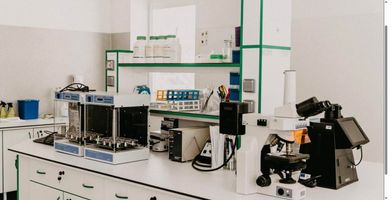
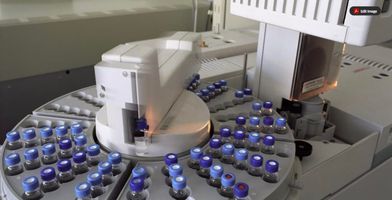
Although they are often paired in study protocols, Ipamorelin and CJC-1295 act through different mechanisms. Ipamorelin is a selective growth-hormone secretagogue (a ghrelin/GHS-receptor agonist) that prompts a clean, pulsatile release of growth hormone in research models without strongly affecting cortisol or prolactin. CJC-1295, by contrast, is a growth-hormone-releasing hormone (GHRH) analog; the DAC (Drug Affinity Complex) version extends its half-life considerably, which is why researchers study it for sustained GH/IGF-1 elevation. Because one mimics ghrelin and the other mimics GHRH, investigators frequently examine them in combination to explore potential synergistic signaling on the GH axis. Research interest spans body-composition models, recovery and tissue-repair studies, and sleep and metabolic endpoints, always within preclinical, in-vitro, or animal contexts rather than approved human use. Choosing between them, or studying them together, comes down to the experimental question: pulsatile versus sustained signaling, short versus extended half-life, and the specific endpoints being measured. Whichever a protocol calls for, data quality depends on verified material. Every batch of Ipamorelin and CJC-1295 from Kynetide is third-party HPLC tested to 99%+ purity and ships with a full Certificate of Analysis and batch traceability. Both peptides from Kynetide are supplied strictly for in-vitro and laboratory research use only and are not drugs, supplements, or cosmetics, and are not intended for human or veterinary use.
Related Research Peptides
Continue your growth-hormone secretagogue research with these lab-verified compounds, each shipped with a batch-specific third-party COA:
Ipamorelin 10mg — selective GH secretagogue
CJC-1295 + IPA — GHRH analog and Ipamorelin blend
Tesamorelin 10mg — GHRH-analog metabolic research
MOTS-c 40mg — mitochondrial and metabolic research