A Certificate of Analysis (COA) is the single most important document that comes with a research peptide order, yet it's also one of the most overlooked. Knowing how to read one — and what to look for — turns an unfamiliar lab report into a clear signal of quality and identity. Here's a practical breakdown of what every COA should tell you.
Peptide Dosing Math 101: How to Calculate Research Doses From Vial Concentration
Getting the dose right starts with getting the math right. Every research peptide vial carries a concentration, and translating that number into an accurate volume for a syringe is a skill every researcher needs to be comfortable with. This guide walks through the core dosing formula, a worked example, and the most common calculation mistakes to avoid.
Why Dosing Math Matters
A vial label states concentration, not dose, and confusing the two is one of the most common errors in research settings. A dosing error of even a small margin can meaningfully change the outcome of an experiment, especially when working with potent compounds active at microgram levels. Building a reliable, repeatable process for converting concentration into an accurate draw volume protects both the integrity of the data and the research budget.
Understanding Vial Concentration
Concentration is typically expressed in milligrams per milliliter (mg/mL) once a lyophilized peptide has been reconstituted with bacteriostatic or sterile water. This figure depends entirely on how much liquid was added during reconstitution, so two vials of the same peptide can have very different concentrations if mixed differently. Always confirm the final concentration after reconstitution rather than assuming it matches the vial's original mg amount.
The Basic Dosing Formula
The core formula is straightforward: volume to draw equals desired dose divided by concentration. If a vial is reconstituted to 2 mg/mL and a protocol calls for a 250 mcg (0.25 mg) dose, the calculation is 0.25 mg divided by 2 mg/mL, giving 0.125 mL to draw. Working in consistent units throughout, converting everything to either milligrams or micrograms before dividing, prevents the single most common source of error.
Worked Example: From Vial to Syringe
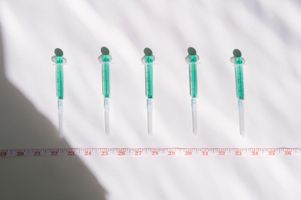
Suppose a 5 mg vial is reconstituted with 2.5 mL of bacteriostatic water, giving a concentration of 2 mg/mL. A protocol calling for a 500 mcg dose means dividing 0.5 mg by 2 mg/mL, which equals 0.25 mL. On a standard 1 mL (100-unit) insulin syringe, that 0.25 mL corresponds to the 25-unit mark, making it easy to translate the calculation directly onto the syringe barrel. Writing out each step, mg dose, mg/mL concentration, and resulting mL or unit volume, before drawing any liquid helps catch errors before they happen.
Common Dosing Math Mistakes to Avoid
One of the most frequent errors is mixing up milligrams and micrograms, since a misplaced decimal point can result in a tenfold or thousandfold dosing mistake. Another common pitfall is assuming a vial's concentration without checking the actual reconstitution volume used, since this varies between researchers and even between batches. It also helps to double check syringe markings, since insulin syringes are marked in units while standard syringes are marked in milliliters, and mixing up the two scales leads directly to measurement errors. Recalculating from scratch, rather than reusing a previous protocol's numbers for a new concentration, is the simplest way to avoid carrying an old error forward.