Industry reporting in 2026 has put the global peptide therapeutics market at well over $100 billion, with one widely cited industry report estimating it near $140 billion and pegging the parallel research-grade gray market, driven by consumer demand for compounds like BPC-157 and Epitalon, at an additional $1 billion to $3 billion. Estimates vary by source and methodology, but the direction is consistent: demand for peptide compounds has accelerated sharply since 2025. In a market where unverified imports are common, the practical filter is simple: only advance compounds that appear on current batch-specific Lab Reports with third-party HPLC documentation.
Where the growth is coming from: Growth has been fueled by three overlapping trends: mainstream wellness and longevity interest in peptides as a category, high-profile regulatory attention as the FDA debates compounding access to several popular compounds, and continued academic and preclinical research into mechanisms like tissue repair, mitochondrial function, and telomere biology. Each of these has pushed more researchers and consumers toward peptide compounds, widening the market on both the legitimate research-grade side and the unregulated gray-market side.
The real story: a widening purity gap: Industry publications and regulators have converged on the same underlying concern: as demand grows faster than the supply of properly verified compounds, the gap between rigorously tested, HPLC-verified research peptides and cheaper, unverified imports is widening rather than closing. A compound that has not been independently verified can vary substantially in identity and purity from batch to batch, introducing a variable that undermines reproducibility before an experiment even begins.
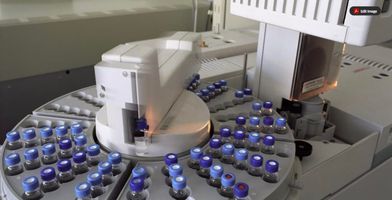
Why HPLC verification is the dividing line: High-Performance Liquid Chromatography (HPLC) is the standard method for confirming that a peptide sample is what it claims to be and quantifying its purity. A batch-specific Certificate of Analysis (COA) from an independent third-party laboratory documents that verification for a specific lot, rather than relying on a manufacturer's own claims. In a market growing as quickly as this one, that documentation is the clearest signal of a legitimate supplier.
What this means for research budgets: For laboratories, the market's growth is mostly a background fact. What matters directly is sourcing: a lower price on an unverified compound is not a saving if it introduces variability that invalidates a study's results. Verifying identity and purity before a compound enters a protocol remains the most cost-effective way to protect a research budget, regardless of how large the broader market becomes.
Conclusion: The peptide market's headline growth numbers for 2026 are real, but they obscure the more important trend underneath: a widening gap between verified, research-grade compounds and unverified imports. This article is provided for informational purposes only. Kynetide's compounds are sold strictly for laboratory research use and are not intended for human or animal consumption.
Related Research Peptides: Explore Retatrutide 30mg, GHK-Cu 50mg, NAD+ 500mg, and Ipamorelin 10mg.