99%+ HPLC Pure | Batch-Specific Third-Party COAs | Free Shipping Over $250

Dr. Marcus Reed | 20 hours ago

BPC-157 in 2026: What the Latest Research Actually Shows

A 2026 market-news roundup of the peer-reviewed and preclinical research behind BPC-157, its current regulatory status, and the purity standards that keep tissue-repair research reproducible.

Frequently Asked Questions

Is BPC-157 approved for human use? No. BPC-157 is not FDA-approved for human use. It is prohibited by WADA under Section S0, and its potential compounding status is under FDA review as of the July 2026 PCAC hearing.


What has preclinical research studied about BPC-157? Animal and preclinical studies have explored its proposed role in angiogenesis and collagen synthesis relevant to tendon, ligament, muscle, and gastrointestinal tissue repair.


Is there strong human clinical evidence for BPC-157? Human data remains limited. A cited 2025 literature review found only a small number of studies directly examining human outcomes, generally with small sample sizes.


Why do some researchers question BPC-157's characterization? A 2026 Chemistry World feature reported that some researchers have raised questions about how the peptide was originally isolated and whether it has been consistently characterized across studies.


What purity standard should researchers look for in BPC-157? A batch-specific Certificate of Analysis from an independent third-party lab confirming HPLC-verified identity and purity, to rule out compound variability between studies.

BPC-157's Research Profile Going Into 2026

BPC-157 remains one of the most frequently studied peptides in tissue-repair and regenerative research, and 2026 has brought a wave of new attention: literature reviews in pharmacy and sports-medicine journals, a feature from Chemistry World on the Croatian researchers who first isolated it, and inclusion in the FDA's July 2026 hearing on compounding access. Together, these developments make BPC-157 a useful case study in how a widely used research peptide is evaluated, regulated, and discussed.


What preclinical research has explored: Preclinical and animal studies have investigated BPC-157's proposed role in angiogenesis (new blood vessel formation) and collagen synthesis, mechanisms relevant to tendon, ligament, and muscle repair. Musculoskeletal research has described effects on tendon healing in animal models, and separate research lines have examined its interaction with gastrointestinal tissue, reflecting its origin as a compound derived from a gastric protective protein. A 2026 orthopaedic-research review noted that BPC-157 was the most frequently represented peptide agent across the musculoskeletal studies it examined.


Open questions in the literature: Not every question about BPC-157 is settled. A June 2026 feature in Chemistry World highlighted that some researchers still question aspects of how the peptide was originally isolated and characterized, and a 2025 literature review cited in pharmacy-trade coverage found only a small number of studies directly examining human outcomes, most involving small samples such as intra-articular knee pain. This is a useful reminder that preclinical and mechanistic findings do not automatically translate into confirmed human outcomes, and that researchers should treat BPC-157 as an active, evolving area of study rather than a settled one.


Regulatory status in 2026: BPC-157 is currently prohibited by the World Anti-Doping Agency (WADA) under its Section S0 category for non-approved substances, and it is one of seven peptides under review at the FDA's July 23-24, 2026 Pharmacy Compounding Advisory Committee meeting for potential inclusion on the 503A Bulks List. Distribution of BPC-157 for human use remains illegal outside of that specific compounding framework, and none of this changes its status as a research-use-only compound in laboratory settings.


Why purity still drives reproducibility: Because BPC-157 research spans gastrointestinal, tendon, and muscle models, reproducibility depends heavily on knowing exactly what was administered. A batch-specific Certificate of Analysis confirms identity and purity by HPLC, ruling out compound variability as an explanation for inconsistent results between studies or labs. Given how much attention BPC-157 is drawing in 2026, verified sourcing is more important than ever for anyone designing a new study.


Conclusion: BPC-157 enters the second half of 2026 as both one of the most studied and most scrutinized peptides in tissue-repair research. This article summarizes publicly reported research and regulatory developments for informational purposes only; it is not medical advice, and Kynetide's BPC-157 is sold strictly for laboratory research use and is not intended for human or animal consumption.


Related Research Peptides: Explore BPC-157 5mg, TB-500 5mg, GHK-Cu 50mg, and the BPC-157 + TB-500 stack.
Let’s create what matters — together.

Dr. Marcus Reed

More Posts

Thymosin Alpha-1 in 2026: What the Immune Research Actually SupportsThymosin Alpha-1 in 2026: What the Immune Research Actually Supports
Thymosin Alpha-1 in 2026: What the Immune Research Actually Supports

A 2026 market-news look at why Thymosin Alpha-1 is drawing fresh research interest for immune health and healthy aging, and what the current evidence does and doesn't support.

KPV: The Anti-Inflammatory Peptide at the Center of the FDA's 2026 Compounding ReviewKPV: The Anti-Inflammatory Peptide at the Center of the FDA's 2026 Compounding Review
KPV: The Anti-Inflammatory Peptide at the Center of the FDA's 2026 Compounding Review

A 2026 market-news look at KPV, the alpha-MSH-derived tripeptide included in the FDA's upcoming July 23-24 Pharmacy Compounding Advisory Committee review, and what the research says about its proposed anti-inflammatory mechanisms.

DIY Peptide Dosing Is Surging in 2026 — Here's What the Safety Data Actually ShowsDIY Peptide Dosing Is Surging in 2026 — Here's What the Safety Data Actually Shows
DIY Peptide Dosing Is Surging in 2026 — Here's What the Safety Data Actually Shows

A 2026 market-news look at why self-directed peptide use is climbing, what clinicians and major outlets are warning about unsupervised dosing, and how researchers can reduce risk through verified sourcing and rigorous protocols.

Why Peptides Are 2026's Buzziest Wellness Trend — And Why Sourcing MattersWhy Peptides Are 2026's Buzziest Wellness Trend — And Why Sourcing Matters
Why Peptides Are 2026's Buzziest Wellness Trend — And Why Sourcing Matters

A 2026 market-news look at why peptides have become the year's defining longevity and biohacking trend, what physicians are warning about DIY use, and why verified sourcing matters more than ever.

Peptide Market Snapshot 2026: Why the Purity Gap Is the Real StoryPeptide Market Snapshot 2026: Why the Purity Gap Is the Real Story
Peptide Market Snapshot 2026: Why the Purity Gap Is the Real Story

A 2026 market-news look at how fast the research peptide industry is growing, and why the widening gap between third-party HPLC-verified compounds and unverified gray-market imports matters more than the growth numbers themselves.

FDA's July 2026 PCAC Meeting: What the Peptide Compounding Debate Means for ResearchersFDA's July 2026 PCAC Meeting: What the Peptide Compounding Debate Means for Researchers
FDA's July 2026 PCAC Meeting: What the Peptide Compounding Debate Means for Researchers

A 2026 market-news briefing on the FDA's Pharmacy Compounding Advisory Committee review of seven bulk peptides — and why the outcome matters for research-grade sourcing standards.

MOTS-c & SS-31: Top Mitochondrial Peptides for 2026 Longevity ResearchMOTS-c & SS-31: Top Mitochondrial Peptides for 2026 Longevity Research
MOTS-c & SS-31: Top Mitochondrial Peptides for 2026 Longevity Research

A 2026 research-use-only deep dive into MOTS-c, SS-31, and the mitochondrial peptides driving longevity and cellular-energy research, plus the handling and third-party purity standards that keep results reproducible.

Retatrutide vs Tirzepatide 2026: Triple vs Dual Agonist Research ComparisonRetatrutide vs Tirzepatide 2026: Triple vs Dual Agonist Research Comparison
Retatrutide vs Tirzepatide 2026: Triple vs Dual Agonist Research Comparison

A 2026 research-use-only comparison of the triple agonist Retatrutide and the dual agonist Tirzepatide: receptor profiles, how each is studied in metabolic models, and the purity standards that support reproducible results.

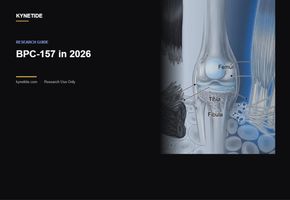
BPC-157 remains one of the most widely studied peptides in tissue-repair and recovery research. This 2026 update reviews how the compound is investigated across gastrointestinal, tendon, and muscle models, its proposed angiogenic and anti-inflammatory mechanisms, and the reconstitution, storage, and third-party purity standards every lab should verify. For laboratory research use only.BPC-157 remains one of the most widely studied peptides in tissue-repair and recovery research. This 2026 update reviews how the compound is investigated across gastrointestinal, tendon, and muscle models, its proposed angiogenic and anti-inflammatory mechanisms, and the reconstitution, storage, and third-party purity standards every lab should verify. For laboratory research use only.
BPC-157 remains one of the most widely studied peptides in tissue-repair and recovery research. This 2026 update reviews how the compound is investigated across gastrointestinal, tendon, and muscle models, its proposed angiogenic and anti-inflammatory mechanisms, and the reconstitution, storage, and third-party purity standards every lab should verify. For laboratory research use only.

A 2026 research-use-only overview of how BPC-157 is studied across tissue-repair models, its proposed mechanisms, and the purity standards that support reproducible results.