Thymosin Alpha-1 in 2026: What the Immune Research Actually Supports
A 2026 market-news look at why Thymosin Alpha-1 is drawing fresh research interest for immune health and healthy aging, and what the current evidence does and doesn't support.

A 2026 market-news briefing on the FDA's Pharmacy Compounding Advisory Committee review of seven bulk peptides — and why the outcome matters for research-grade sourcing standards.
Why This Regulatory Moment Matters for Research Peptides
On July 23-24, 2026, the FDA's Pharmacy Compounding Advisory Committee (PCAC) is scheduled to evaluate seven bulk peptide substances, BPC-157, KPV, TB-500, MOTS-C, Emideltide, Semax, and Epitalon, for potential inclusion on the 503A Bulks List. Under the Federal Food, Drug, and Cosmetic Act, adding a substance to this list would let licensed compounding pharmacies prepare it for patients on a prescription basis. For the research community, the hearing is being closely watched because its outcome will shape how these compounds are classified and discussed for years to come.
The regulatory split: The meeting arrives amid a public disagreement inside the agency. Health Secretary Robert F. Kennedy Jr. has pushed to loosen restrictions and expand compounding access to these peptides, while the FDA's own reviewing scientists have recommended against reclassification, citing insufficient safety and efficacy evidence for several of the candidates. That split has made the July hearing one of the most closely covered regulatory events in the compound-research space this year.
What the 503A Bulks List actually changes: It is worth being precise about scope. A 503A listing decision governs whether licensed compounding pharmacies may prepare a substance for a prescribing clinician and patient. It does not create a pathway for over-the-counter human use, and it has no bearing on the long-standing rule that research peptides sold for laboratory use are not intended for human or animal consumption. Whatever the committee decides, that research-use distinction remains unchanged.
Why the widening quality gap matters more than ever: Industry reporting this year has estimated the broader peptide therapeutics market at well over $100 billion, with a parallel research-grade gray market now estimated in the billions of dollars as consumer demand for compounds like BPC-157 and Epitalon has surged. As that demand grows, so does the gap between rigorously HPLC-verified, third-party-tested compounds and cheaper, unverified imports, a gap that regulators, researchers, and industry publications have all flagged as the more urgent quality issue, regardless of how the compounding debate resolves.
What this means for laboratories: For laboratories and researchers, the practical takeaway is unchanged by the regulatory back-and-forth. Compound identity and purity should be independently verified before any peptide enters a study, via batch-specific Certificates of Analysis from a third-party lab. That standard holds whether a peptide ends up on the 503A list, stays off it, or the committee's recommendation shifts again after the July meeting.
Conclusion: The FDA's July 2026 PCAC meeting is a genuine inflection point for how a handful of widely studied peptides are regulated in the compounding space, but it does not change the fundamentals of responsible research sourcing. This article is provided for informational purposes only. Kynetide's compounds are sold strictly for laboratory research use and are not intended for human or animal consumption.
Related Research Peptides: Researchers following this regulatory space often work with several of the compounds under review. Explore BPC-157 5mg, Epithalon 10mg, Semax 30mg, and TB-500 5mg.
Frequently Asked Questions
What is the FDA's Pharmacy Compounding Advisory Committee (PCAC)? The PCAC is an FDA advisory committee that reviews bulk drug substances proposed for the 503A Bulks List, which governs what licensed compounding pharmacies may prepare for patients under a prescription.
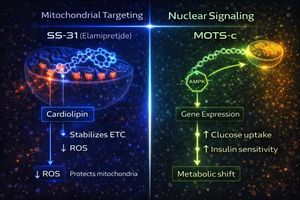
Which peptides are being reviewed at the July 2026 meeting? The July 23-24, 2026 meeting is scheduled to evaluate BPC-157, KPV, TB-500, MOTS-C, Emideltide, Semax, and Epitalon for potential 503A Bulks List inclusion.
Does this decision affect research-grade peptide purchases? No. The 503A Bulks List governs compounding pharmacies preparing prescriptions for patients. It does not change the research-use-only status of laboratory-grade peptides, which remain not for human or animal consumption.
Why have FDA scientists recommended against reclassification? According to reporting on the review, FDA scientists cited insufficient safety and efficacy evidence for several of the peptides under consideration, creating a split with policy officials pushing for looser restrictions.
What should researchers verify regardless of the regulatory outcome? Independent, batch-specific third-party Certificates of Analysis confirming identity and purity by HPLC remain the baseline standard for any compound entering a research protocol.