99%+ HPLC Pure | Batch-Specific Third-Party COAs | Free Shipping Over $250

Key Market Numbers at a Glance (2026)

Global Market Size (2026): ~$164 billion. Projected Size (2033): ~$294.6 billion. CAGR (2026–2033): 8.7%. North America Share (2025): 61.9% (largest regional market). Largest Application Segment: Metabolic disorders (~63.6% share). Strong Growth Areas: Oncology, cardiovascular, and other emerging research applications. These figures come from comprehensive analyses tracking both innovative (branded) peptides — which dominate with over 80% share — and growing generic options.

Regional Leadership: North America Dominates

North America, particularly the United States, leads with advanced R&D infrastructure, robust clinical trial activity, and sophisticated research institutions. This region benefits from strong academic and industry partnerships driving peptide science forward.

What's Driving the 2026 Surge?

Several converging factors are accelerating research and commercial adoption. GLP-1 and Metabolic Peptide Research: the clinical and commercial validation of GLP-1 receptor agonists has spurred investment in next-generation multi-agonist compounds and related research. Technological Advances: improvements in solid-phase peptide synthesis, AI-driven design, PEGylation, lipid nanoparticles, and delivery systems are addressing longstanding challenges around stability, bioavailability, and half-life in laboratory settings. Chronic Disease and Aging Research: rising rates of obesity, diabetes, and age-related conditions are increasing research interest in precise, targeted compounds. Public and Scientific Interest: search trend data shows growing interest in peptide-related topics, reflecting rising public awareness of the field. Manufacturing Scale-Up: CDMO investment and hybrid synthesis technologies are improving supply chains and reducing production costs over time.

Implications for Peptide Research

The mainstream growth of peptide therapeutics is increasing visibility and legitimacy for the broader field of peptide science, including laboratory-grade research peptides used in academic and preclinical research settings. Key trends include growing demand for well-characterized, high-purity compounds for laboratory and preclinical research; rising interest in mechanistic and comparative research across peptide classes; and a need for trusted, science-based educational resources that help researchers understand mechanisms of action and proper research handling. At Kynetide, we supply premium research-grade peptides intended strictly for laboratory research use, along with clear, science-based educational content to support the research community. All products are sold for research purposes only and are not intended for human consumption.

FAQ: Peptide Therapeutics Market 2026

What is the peptide therapeutics market size in 2026? Approximately $164 billion globally, according to recent industry analyses. Which segment is growing fastest? Metabolic disorders currently hold the largest share, driven by GLP-1 and related peptide research. Oncology and cardiovascular research applications are also expanding. How does this affect peptide research? Mainstream clinical and commercial growth increases overall scientific interest, driving demand for high-quality research-grade materials and educational content for the research community. Is North America still the leader? Yes, it held about 62% share in 2025 and continues to lead due to infrastructure, research investment, and innovation pipelines. Interested in learning more about peptide research? Visit Kynetide.com to browse our research-grade peptide catalog and educational resources.

Kynetide Research Team | 11 hours ago

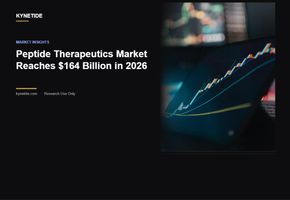
Peptide Therapeutics Market Reaches $164 Billion in 2026 — What the Latest Data Means for Peptide Research

The peptide therapeutics market is experiencing powerful momentum in 2026. According to Grand View Research, the global market stood at approximately $140.9 billion in 2025 and is expected to reach $164.0 billion in 2026, on track to hit $294.6 billion by 2033 at a compound annual growth rate (CAGR) of 8.7%.

Let’s create what matters — together.

Kynetide Research Team

More Posts

Thymosin Alpha-1 in 2026: What the Immune Research Actually SupportsThymosin Alpha-1 in 2026: What the Immune Research Actually Supports
Thymosin Alpha-1 in 2026: What the Immune Research Actually Supports

A 2026 market-news look at why Thymosin Alpha-1 is drawing fresh research interest for immune health and healthy aging, and what the current evidence does and doesn't support.

KPV: The Anti-Inflammatory Peptide at the Center of the FDA's 2026 Compounding ReviewKPV: The Anti-Inflammatory Peptide at the Center of the FDA's 2026 Compounding Review
KPV: The Anti-Inflammatory Peptide at the Center of the FDA's 2026 Compounding Review

A 2026 market-news look at KPV, the alpha-MSH-derived tripeptide included in the FDA's upcoming July 23-24 Pharmacy Compounding Advisory Committee review, and what the research says about its proposed anti-inflammatory mechanisms.

DIY Peptide Dosing Is Surging in 2026 — Here's What the Safety Data Actually ShowsDIY Peptide Dosing Is Surging in 2026 — Here's What the Safety Data Actually Shows
DIY Peptide Dosing Is Surging in 2026 — Here's What the Safety Data Actually Shows

A 2026 market-news look at why self-directed peptide use is climbing, what clinicians and major outlets are warning about unsupervised dosing, and how researchers can reduce risk through verified sourcing and rigorous protocols.

Why Peptides Are 2026's Buzziest Wellness Trend — And Why Sourcing MattersWhy Peptides Are 2026's Buzziest Wellness Trend — And Why Sourcing Matters
Why Peptides Are 2026's Buzziest Wellness Trend — And Why Sourcing Matters

A 2026 market-news look at why peptides have become the year's defining longevity and biohacking trend, what physicians are warning about DIY use, and why verified sourcing matters more than ever.

BPC-157 in 2026: What the Latest Research Actually ShowsBPC-157 in 2026: What the Latest Research Actually Shows
BPC-157 in 2026: What the Latest Research Actually Shows

A 2026 market-news roundup of the peer-reviewed and preclinical research behind BPC-157, its current regulatory status, and the purity standards that keep tissue-repair research reproducible.

Peptide Market Snapshot 2026: Why the Purity Gap Is the Real StoryPeptide Market Snapshot 2026: Why the Purity Gap Is the Real Story
Peptide Market Snapshot 2026: Why the Purity Gap Is the Real Story

A 2026 market-news look at how fast the research peptide industry is growing, and why the widening gap between third-party HPLC-verified compounds and unverified gray-market imports matters more than the growth numbers themselves.

FDA's July 2026 PCAC Meeting: What the Peptide Compounding Debate Means for ResearchersFDA's July 2026 PCAC Meeting: What the Peptide Compounding Debate Means for Researchers
FDA's July 2026 PCAC Meeting: What the Peptide Compounding Debate Means for Researchers

A 2026 market-news briefing on the FDA's Pharmacy Compounding Advisory Committee review of seven bulk peptides — and why the outcome matters for research-grade sourcing standards.

MOTS-c & SS-31: Top Mitochondrial Peptides for 2026 Longevity ResearchMOTS-c & SS-31: Top Mitochondrial Peptides for 2026 Longevity Research
MOTS-c & SS-31: Top Mitochondrial Peptides for 2026 Longevity Research

A 2026 research-use-only deep dive into MOTS-c, SS-31, and the mitochondrial peptides driving longevity and cellular-energy research, plus the handling and third-party purity standards that keep results reproducible.

Retatrutide vs Tirzepatide 2026: Triple vs Dual Agonist Research ComparisonRetatrutide vs Tirzepatide 2026: Triple vs Dual Agonist Research Comparison
Retatrutide vs Tirzepatide 2026: Triple vs Dual Agonist Research Comparison

A 2026 research-use-only comparison of the triple agonist Retatrutide and the dual agonist Tirzepatide: receptor profiles, how each is studied in metabolic models, and the purity standards that support reproducible results.