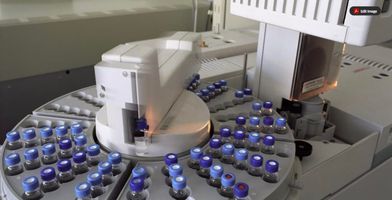
A Certificate of Analysis (COA) is the single most important document that comes with a research peptide order, yet it's also one of the most overlooked. Knowing how to read one — and what to look for — turns an unfamiliar lab report into a clear signal of quality and identity. Here's a practical breakdown of what every COA should tell you.
New Peptide Mechanism Discovered That Could Calm Runaway Inflammation in Allergic Asthma
Researchers at the University of Bonn and the Research Center Borstel, Leibniz Lung Center have identified a previously unknown way a synthetic peptide can quiet an overactive immune response. Published in Advanced Science, the study shows that the membrane-active peptide Pep19-2.5 binds directly to human immune cell membranes and blocks activation of the NLRP3 inflammasome, the molecular switch behind chronic airway inflammation in allergic asthma. The findings point to a new pharmacological strategy for regulating inflammation and add to growing research into peptides as precision tools for immune modulation.
Why the Immune System's 'Off Switch' Matters for Chronic Disease
Allergic asthma is driven by an immune system that overreacts to substances that pose no real danger, such as house dust mite particles. At the center of that overreaction sits the NLRP3 inflammasome, a protein complex inside immune cells that acts like a molecular switch for inflammation. When triggered appropriately, it helps the body respond to genuine threats. When it fires too easily or too often, it drives the kind of chronic, long-term inflammation seen not only in asthma but in cardiovascular disease, neuroinflammation, and inflammatory bowel disease. That has made the NLRP3 inflammasome a high-priority target for researchers, but most existing efforts have relied on small synthetic molecules designed around a conventional lock-and-key model. A newly reported peptide-based mechanism, described this week by researchers at the University of Bonn and the Research Center Borstel, Leibniz Lung Center, approaches the same target from an entirely different angle, working through the immune cell membrane itself rather than a classic binding pocket.
Inside the Discovery: How Pep19-2.5 Blocks the NLRP3 Inflammasome
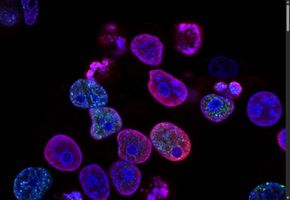
The discovery comes from a collaboration between the Research Center Borstel, Leibniz Lung Center, the University of Bonn, University Hospital Bonn, the University of Graz, and Queen's University Belfast, published in Advanced Science. The team worked with Pep19-2.5, a membrane-active peptide already known for binding bacterial cell membranes, and set out to test whether it could also act on human immune cell membranes. Working first in vitro with monocytes and macrophages, then in a mouse model of house dust mite asthma, the researchers triggered inflammatory responses and traced the peptide's activity using highly sensitive biophysical methods. They found that Pep19-2.5 binds a specific marker lipid at the trans-Golgi network inside immune cells, altering the surrounding membrane lipid environment and interrupting NLRP3 inflammasome activation before it starts, rather than blocking it downstream. Delivered as a nasal spray in the mouse model, the peptide significantly reduced release of pro-inflammatory mediators, calmed airway inflammation, and improved lung function, a mechanism the researchers describe as previously undescribed for this class of peptide.

What This Discovery Does and Doesn't Mean Yet
It is worth being precise about what has actually been shown so far. The NLRP3-inhibiting effect of Pep19-2.5 has been demonstrated in vitro in human immune cells and in vivo in a mouse model of house dust mite asthma, not in human patients. Pep19-2.5 itself is not a new molecule; as Aspidasept, it was already under development for systemic infections such as sepsis and skin and soft tissue infections, and this newly discovered inflammasome-inhibiting function is an additional, separately patented application of a compound that was already being studied. That distinction matters because a well-characterized peptide gaining a second mechanism of interest is a meaningfully different situation from an entirely unproven compound. Even so, moving from a mouse model to a validated human therapy is a long process that typically involves further mechanistic studies, toxicology work, and controlled clinical trials. As always, findings like this are a research signal worth watching, not a basis for self-directed use of any peptide.
Why Sourcing Precision Matters for Membrane-Active Peptide Research
Findings like the Pep19-2.5 discovery underline something researchers already know well: membrane-active peptides are defined by precise structural details. How a peptide folds, orients, and binds to lipid membranes determines whether it produces the intended biological effect or simply fails to reproduce in the next experiment. A single synthesis error, a degraded batch, or an unverified impurity can change binding behavior enough to invalidate results, especially for compounds studied at the level of subtle membrane-lipid interactions like those described in this study. That is why every peptide Kynetide supplies ships with a batch-specific, third-party certificate of analysis confirming identity and 99%+ HPLC purity. As research into inflammasome-targeting and other membrane-active peptides accelerates, reliable sourcing documentation is what allows one lab's findings to be meaningfully compared with another's.
Is Pep19-2.5 Available for Purchase or Human Use?
No. Pep19-2.5, also known as Aspidasept, is an investigational compound currently confined to preclinical research. Its newly reported role as an NLRP3 inflammasome inhibitor was demonstrated in vitro and in a mouse model of house dust mite asthma, not in human clinical trials. The research team has filed a patent application covering this newly discovered function, and Prof. Gunther Weindl of the University of Bonn has described the peptide-based inflammasome-regulation approach as a completely new pharmacological strategy still in its early stages. Turning a preclinical mechanism like this into an approved therapy typically requires years of additional safety and efficacy testing. For now, Pep19-2.5 remains a laboratory research compound studied by qualified research teams, not a product available for purchase or self-administration.
How Is This Different from Other Anti-Inflammatory Research Peptides?
Pep19-2.5 is not the same story as more familiar research peptides like BPC-157 or TB-500, which are studied mainly for proposed tissue-repair and angiogenic activity. This compound's newly reported effect works through a distinct pathway entirely: it binds membrane lipids at the trans-Golgi network inside immune cells and interrupts NLRP3 inflammasome activation before pro-inflammatory signaling begins. That makes it part of a smaller, fast-growing category of membrane-active peptides being explored as upstream immune regulators rather than downstream repair agents. For research teams tracking the peptide field, the distinction matters: NLRP3 is implicated in a wide range of chronic inflammatory conditions beyond asthma, including cardiovascular disease, neuroinflammation, and inflammatory bowel disease, so a peptide-based tool for modulating it could inform multiple research programs, not just respiratory models. As with any compound sourced for laboratory work, researchers should confirm identity, purity, and documentation before use, regardless of how promising the underlying mechanism appears in early studies.