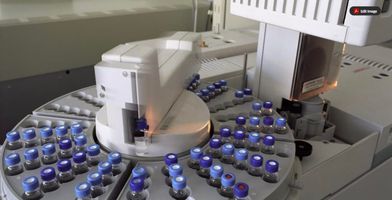
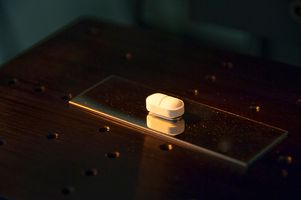
A Certificate of Analysis (COA) is the single most important document that comes with a research peptide order, yet it's also one of the most overlooked. Knowing how to read one — and what to look for — turns an unfamiliar lab report into a clear signal of quality and identity. Here's a practical breakdown of what every COA should tell you.
New Peptide Combination Shows Superior Weight Loss to Leading Obesity Drug Duo in Preclinical Study
A 2026 market-news look at Ascletis Pharma's ASC36_35 fixed-dose peptide combination, its preclinical weight-loss data against the eloralintide/tirzepatide combo, and what once-monthly amylin-GLP-1/GIP co-formulations could mean for the next generation of peptide-based obesity research.
New Peptide Duo Outperforms Rivals in Animal Obesity Model
Ascletis Pharma announced that preclinical data for ASC36_35 FDC, a once-monthly injectable co-formulation of two peptide drug candidates, will be presented in a short oral discussion at the 62nd European Association for the Study of Diabetes (EASD) Annual Meeting in Milan this fall. In a diet-induced obese rat model, the fixed-dose combination produced superior weight loss compared to eloralintide combined with tirzepatide, two of the most closely watched compounds in today's obesity-drug landscape. Jinzi Jason Wu, Ascletis' founder, chairman and CEO, said the data reflect the importance of advancing new treatment options for patients with obesity.
Inside ASC36_35: Two Peptides, Three Metabolic Targets
The ASC36_35 fixed-dose combination pairs ASC36, a peptide amylin-receptor agonist, with ASC35, a dual peptide agonist of the GLP-1 and GIP receptors, packaged into a single once-monthly subcutaneous injection. Ascletis describes the co-formulation as a potentially first-in-class candidate because it engages three validated metabolic targets, the amylin receptor, GLP-1R and GIPR, at once. The once-monthly dosing relies on the company's Self-Assembling Lipid Depot formulation, part of its proprietary Ultra-Long-Acting Platform, which is designed to slow-release peptide payloads over weeks rather than days.
A Crowded Race: 2026's Obesity Peptide Pipeline Keeps Accelerating
Ascletis' announcement lands in the middle of an unusually crowded year for obesity peptide research. A new State of Peptides 2026 report from the Peptide Alliance pegs the broader peptide market at $50 to $60 billion, with GLP-1 and related multi-receptor agonists cited as a primary growth driver, while Ascletis itself has spent 2026 advancing a stack of related programs, including ASC30, an oral small-molecule GLP-1R agonist, and ASC37, a triple GLP-1R/GIPR/GCGR peptide agonist. The pace reflects a broader industry pattern: as tirzepatide and other dual agonists become the benchmark to beat, companies are increasingly pairing peptides that hit different metabolic receptors in a single formulation to chase incremental gains in weight loss.
Why Purity and Verified Sourcing Still Matter as the Pipeline Accelerates
Preclinical peptide combinations like ASC36_35 are still years away from any pharmacy shelf, and Ascletis' data are limited to an animal model presented at a scientific meeting, not a clinical trial in humans. But the steady drumbeat of new multi-receptor peptide candidates underscores how fast the underlying science is moving, and how much research demand there is for well-characterized amylin, GLP-1 and GIP peptide analogs to study receptor behavior, formulation stability and combination effects. For labs working with these compound classes, that only raises the importance of starting from documented, third-party-verified material. Every peptide Kynetide lists ships with a batch-specific Certificate of Analysis confirming 99%+ HPLC purity, and every product is intended strictly for laboratory research use, not for human or animal administration.
FAQ: Is ASC36_35 Available for Purchase or Clinical Use?
Not yet, and not for some time. The data Ascletis is presenting come from a diet-induced obese rat model, not a human trial, and the findings will be discussed at EASD's Annual Meeting in Milan this fall. Ascletis has already secured FDA IND clearance for related programs, including ASC36 as a standalone injection, but ASC36_35 as a fixed-dose combination remains in earlier-stage development. Any path to approval would still require completing the standard phases of human clinical testing before the combination could reach patients.
FAQ: Does This News Affect How I Should Source Research Peptides?
It reinforces it. Whether or not multi-receptor combinations like ASC36_35 eventually reach the clinic, the underlying research categories, amylin analogs, GLP-1/GIP dual agonists, and long-acting peptide formulations, are exactly the compound classes labs are studying right now. Kynetide's role isn't to speculate on which pipeline candidate will win; it's to make sure researchers working in this space have documented, third-party-verified starting material. Every peptide we offer ships with a batch-specific Certificate of Analysis confirming 99%+ HPLC purity, and our products are intended strictly for laboratory research, not for human or animal use, dosing, or self-administration.